Sanctuary Layout and Function
Olympia developed as a sacred precinct in the Alpheios river valley of Elis, western Peloponnese. Unlike fortified cities, the sanctuary remained an open religious and festival centre where Greek city-states convened under truce during games.
The Altis sacred grove contained major temples, treasuries and votive offerings. Pilgrims approached via processional routes lined with statues and dedications from competing poleis asserting prestige.
Key Monuments and Excavation History
German excavations from the 1870s onward, led initially by Ernst Curtius, systematized discovery of temples, the stadium and workshop of Pheidias. Ongoing research employs geophysics and conservation science to stabilize fragile remains.
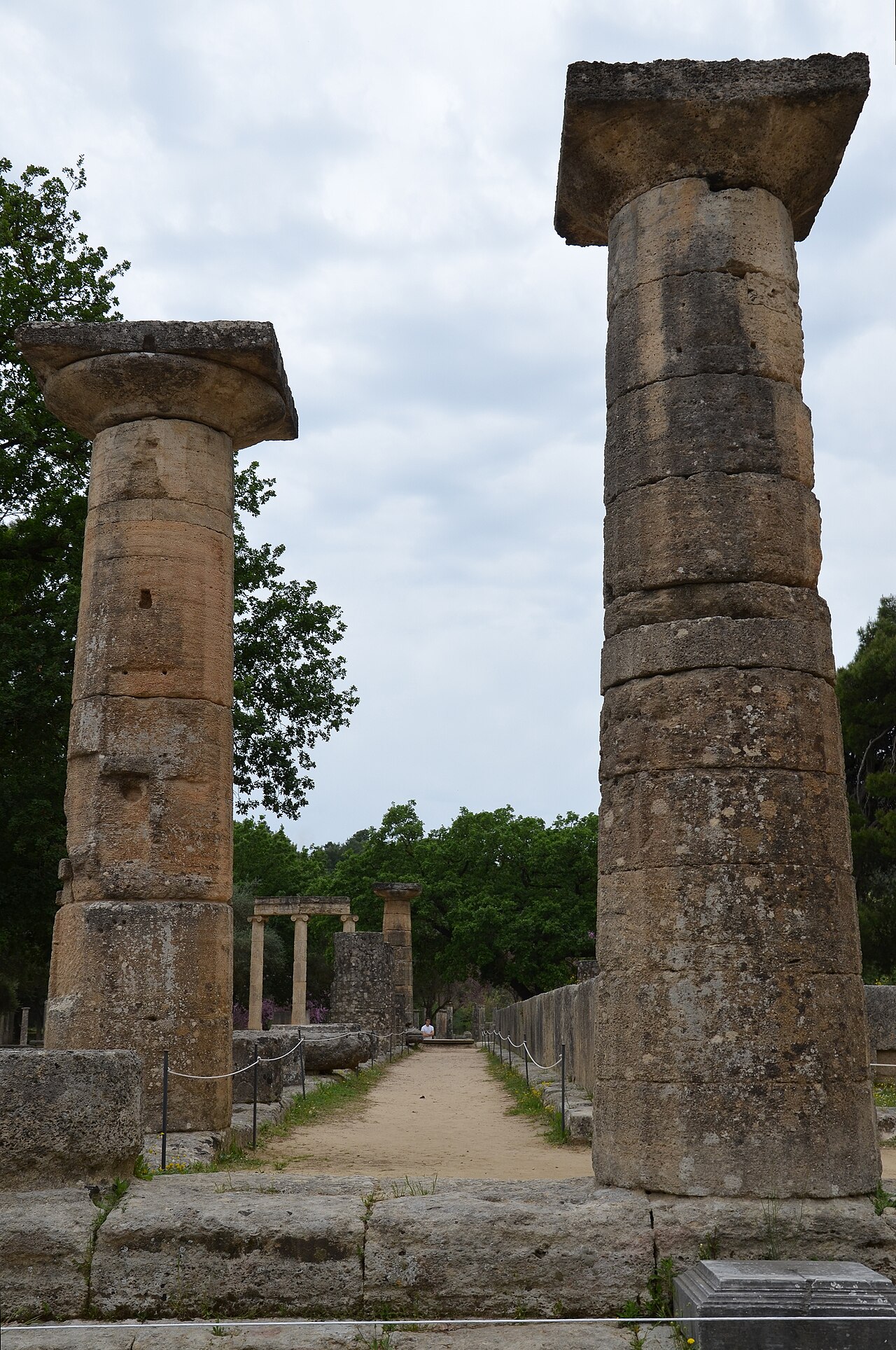
The Temple of Hera (Heraion) — among the oldest Doric temples — housed cult equipment later transferred to the larger Temple of Zeus. The circular Philippeion commemorated Philip II of Macedon and Alexander's dynasty.
The Archaeological Museum of Olympia displays Hermes of Praxiteles, Nike of Paionios and pediment sculptures — essential complements to outdoor ruins.
Athletic Facilities
The stadium, gymnasion, palaestra and hippodrome supported running, wrestling, chariot racing and pentathlon training. Athletes competed nude after oiling bodies — practices documented by classical authors and vase painters.
Starting lines (balbis) with foot grooves and stone embankments for spectators remain visible, allowing visitors to trace race distances approximately 192 metres for the stadion footrace.
Modern Site Management
UNESCO World Heritage designation since 1989 coordinates conservation with tourism flow. Pathways, shade structures and interpretive signage accommodate summer heat while protecting subsurface remains.
Olympia village nearby provides lodging and dining for multi-day archaeological visits, linking ancient heritage to contemporary western Peloponnese hospitality.