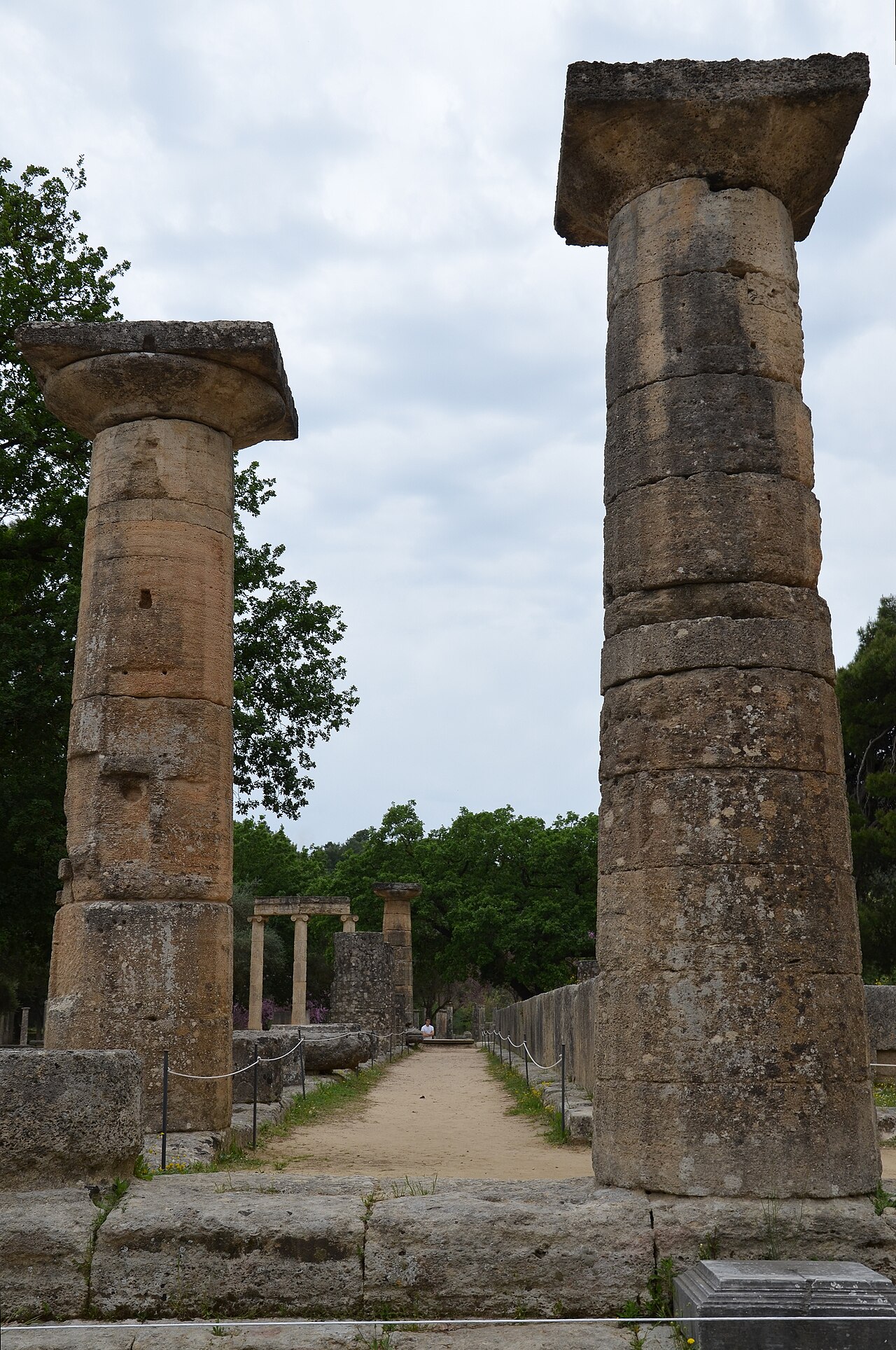
Construction and Design
Built between approximately 470 and 456 BCE, the Temple of Zeus exemplified mature Doric architecture — peripteral colonnade, pronaos and cella housing the cult statue. Local limestone and shellac stucco created uniform exterior surfaces later painted in polychrome.
The temple's dimensions communicated Elis's ambition after Persian Wars victories, asserting regional prestige against rival sanctuaries at Delphi and Nemea.
Phidias and the Chryselephantine Statue
Athenian sculptor Phidias crafted Zeus seated on a cedar throne, adorned with gold, ivory, ebony and precious stones. Ancient writers described the statue's scale as overwhelming human proportion — inspiring awe appropriate to king of gods.
A workshop precinct adjacent to the sanctuary likely housed Phidias's team; archaeological finds include tools and mould fragments associated with large-scale bronze and ivory work.
Pediment Sculpture Narratives
East pediment depicted chariot race between Oenomaus and Pelops — mythic origin story linked to Olympia. West pediment showed Centauromachy battle, symbolizing civilization's triumph over barbarism in classical ideology.
Pediment fragments recovered during excavation now reside in the Olympia museum, allowing close study of drapery carving and figure grouping originally viewed from ground level.
The chryselephantine Zeus ranked among Antipater's Seven Wonders; it was reportedly moved to Constantinople and destroyed by fire in the fifth century CE.
Collapse and Archaeological Recovery
Earthquakes in antiquity and late antique abandonment toppled columns; river flooding buried drums in alluvium. Nineteenth-century excavators reassembled sections to illustrate original height.
Conservation focuses on anastylosis principles — selective re-erection using original material where structurally sound — balancing authenticity with visitor comprehension.